anabrid’s REDAC analogue computer has a modular design. Each mREDAC module consists of identical electronic and mechanical components. The modules are installed in a standardised server rack that has been specially developed to accommodate IT hardware. The digital and network components used are already CE-certified and do not represent any new developments.
Inhaltsverzeichnis
Backplane
An iREDAC consists of exactly one backplane and up to seven mREDACs. The backplane provides the power supply and the digital and analogue networking. The backplane networks both the mREDACs with each other and several iREDACs with each other.
Description
Each cluster has analogue inputs and outputs to the backplane. The backplane transmits the analogue input and output signals of the mREDAC clusters directly via ribbon cables. Another option for transmitting signals over longer distances is to use SMB sockets, as coaxial cables have low radiation thanks to their good electrical shielding, resulting in low interference (crosstalk).
Price
?,- EUR
Topology-block
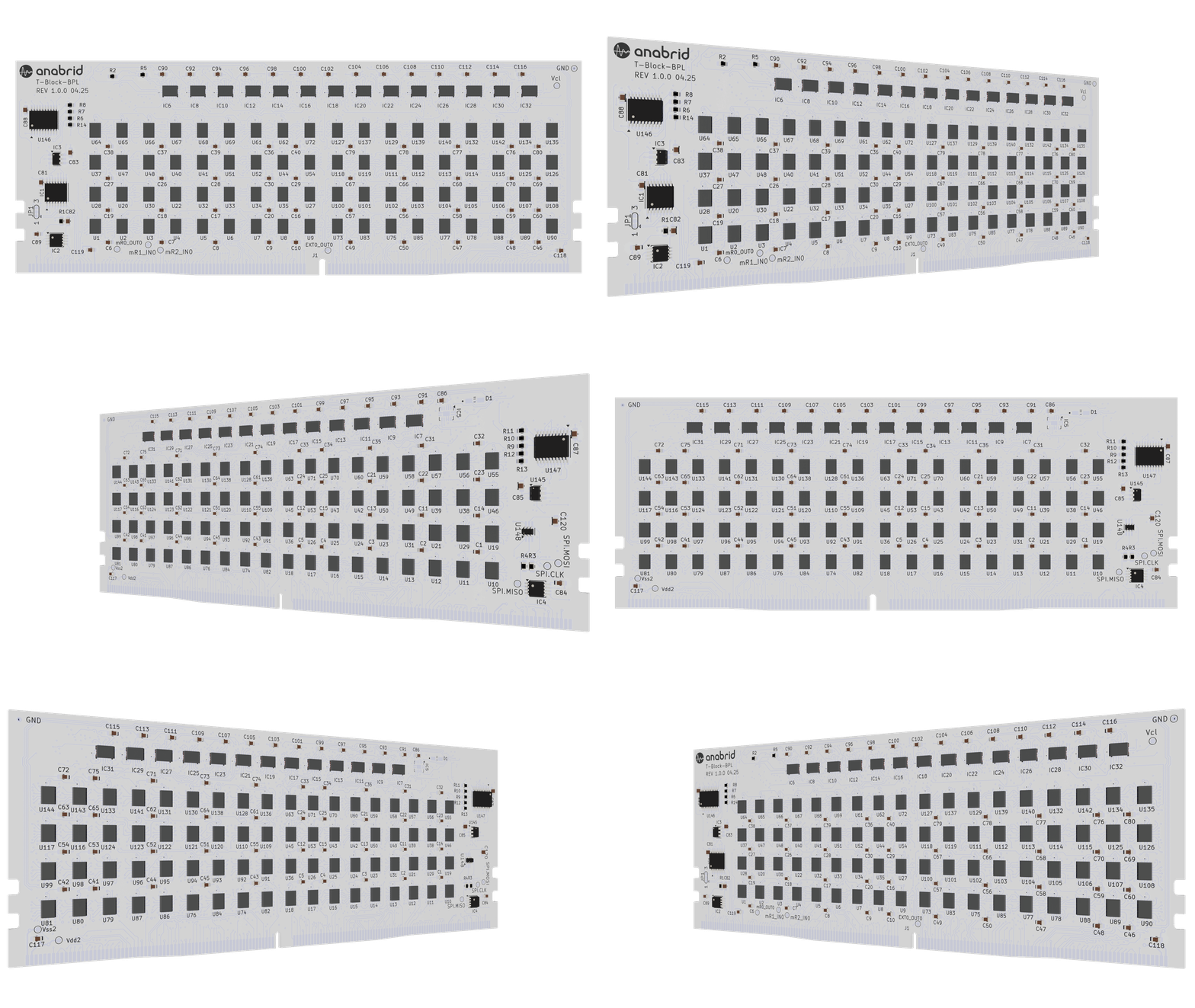
?
Description
?
Price
?,- EUR
mREDAC – Carrier module
The mREDAC carrier module accommodates the necessary U, C, T, I, SH and M blocks for a total of three clusters, as well as a control and monitoring block, via DIMM connectors. Multiple carrier modules are connected via a backplane using VG connectors and coupling interconnects.
Description
The carrier module provides the necessary mechanical and electronic connections between and to the individual DIMM modules, i.e. the blocks. It supplies the supply voltages, which are generated from a central supply voltage using DC/DC converters (point-of-load architecture). It also contains a high-accuracy precision reference voltage source that is used as a reference by all modules.
Price
?,- EUR
U-Block
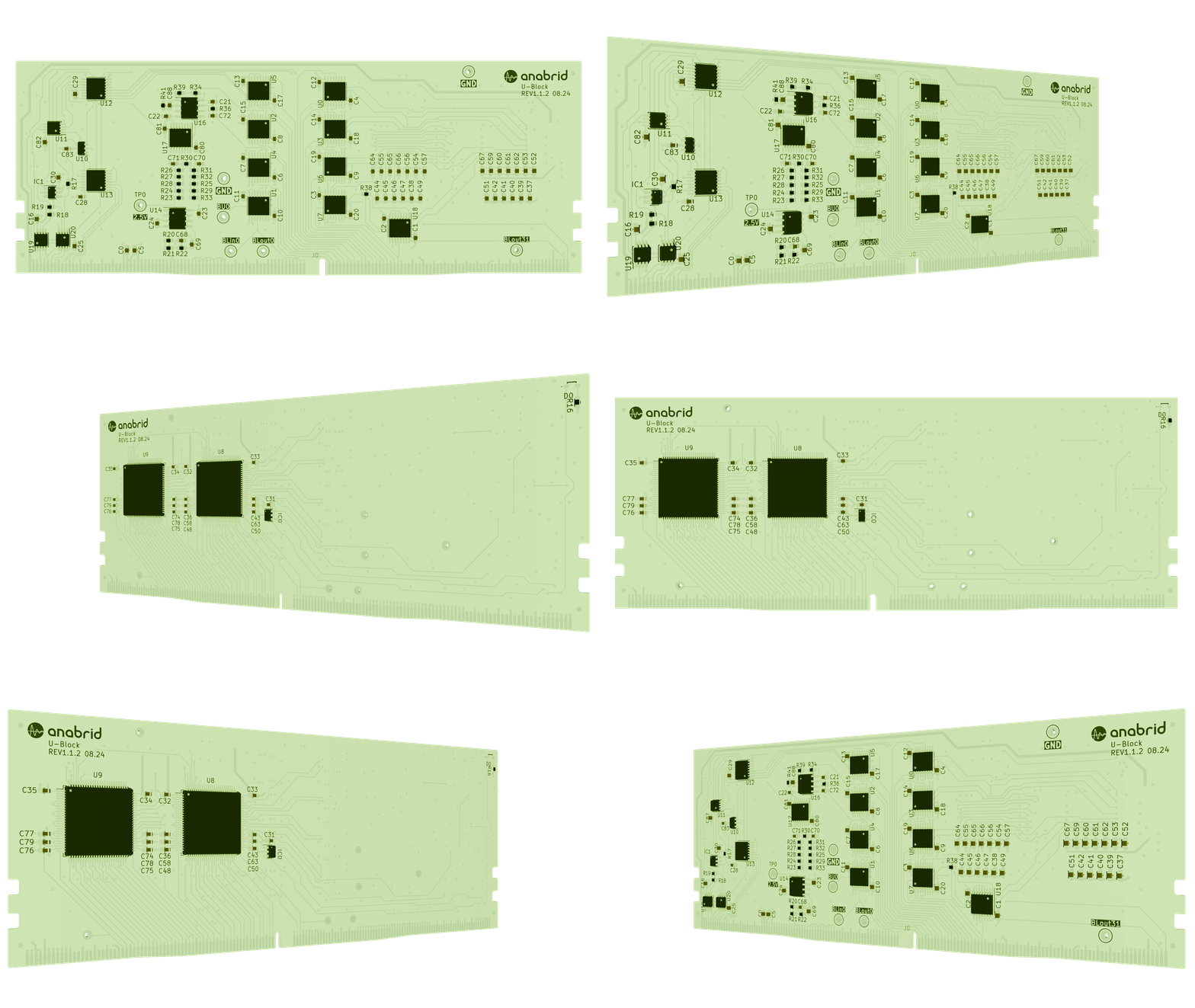
The U-block implements the voltage-based part of the coupling between the analogue computing elements.
Description
At the heart of the U-block are two voltage-coupled 16 x 16 crossbar switches, which are used to implement a 16 x 32 matrix, i.e. the U-block can distribute 16 input signals to 32 outputs, whereby a signal can be routed to more than one output. The two crossbar switches are connected in parallel on the input side, while their 16 outputs each operate independently of one another.
In addition, the U-block has electronic switches on all inputs that can be used to switch between the direct input signals of the U-block and external signal inputs and reference voltages.
Price
?,- EUR
C-Block
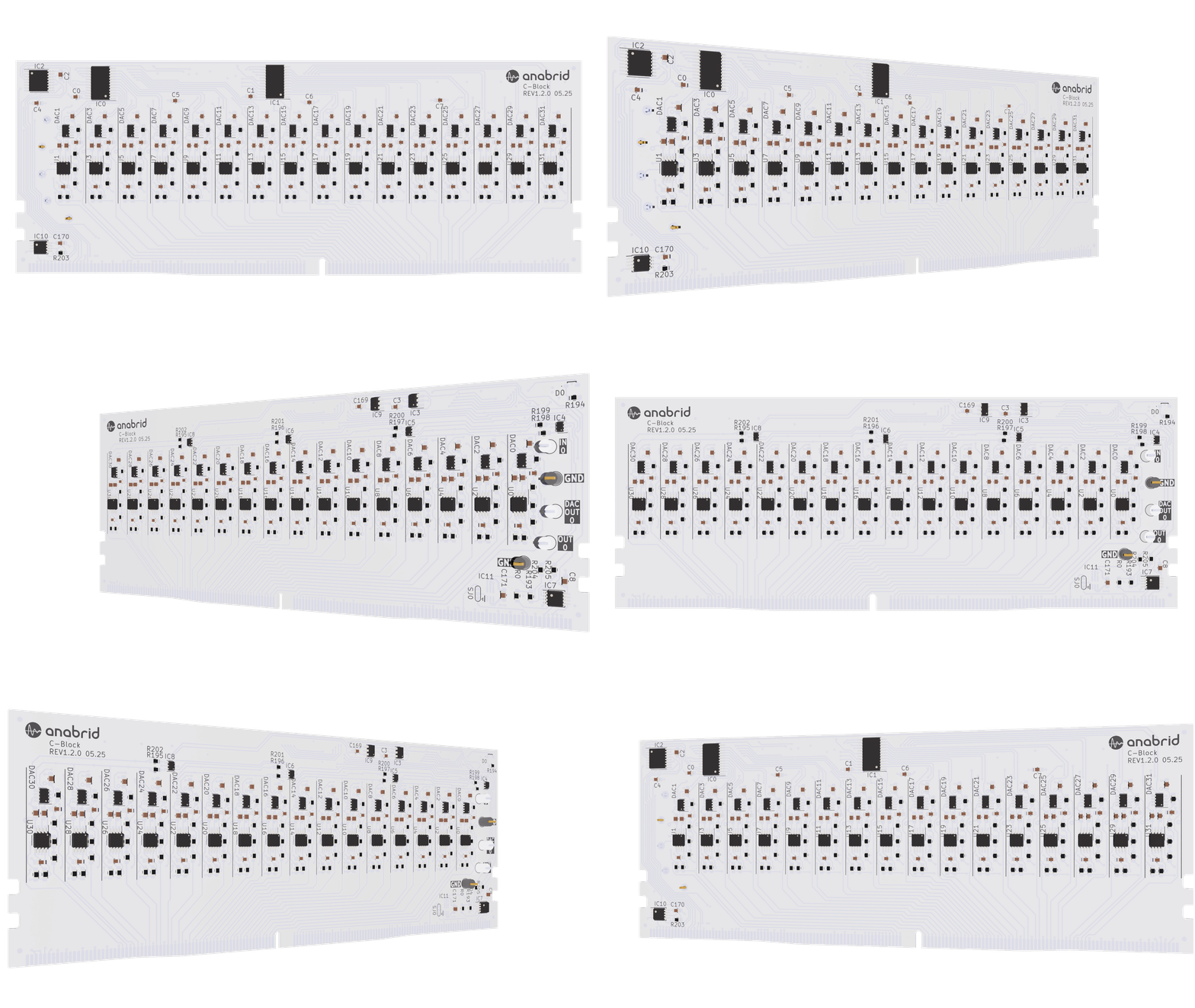
The coefficient block implements the conversion of coefficients for analogue calculation and is located between the U and I blocks.
Description
The C block implements 32 coefficient elements based on multiplying DACs, each with a resolution of 32 bits.
In addition to the amplifier stage, which is unavoidable in this context, a further operational amplifier is provided for each channel, which can be used to switch between ranges so that coefficients can be set either in the interval [-2, 2] or [-20, 20]. Consequently, 12 bits are required per coefficient for the multiplying DAC and one bit for the range switching of the respective channel.
Price
?,- EUR
I-Block
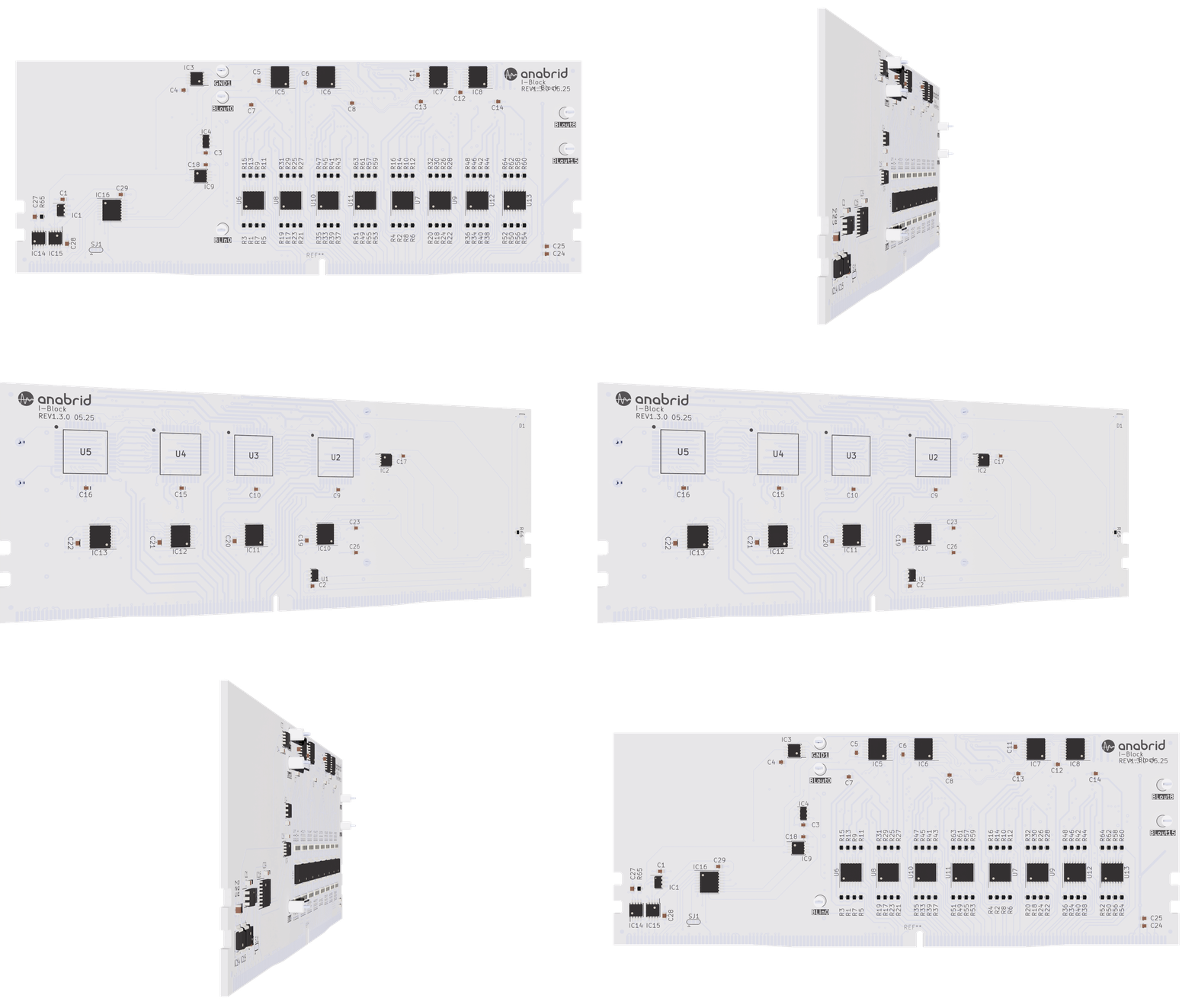
The I-block implements the current-based coupling between the analogue computing elements and allows the input signals to be summed without explicit summing elements.
Description
The task of the I-block is to route 32 values represented by currents to 16 output lines, whereby implicit summation occurs due to current coupling when more than one input current is routed to an output line. While the U block distributes 16 signals across 32 signal paths, the I block can combine these 32 signals back into a maximum of 16 output signals.
Price
?,- EUR
M-Block MUL
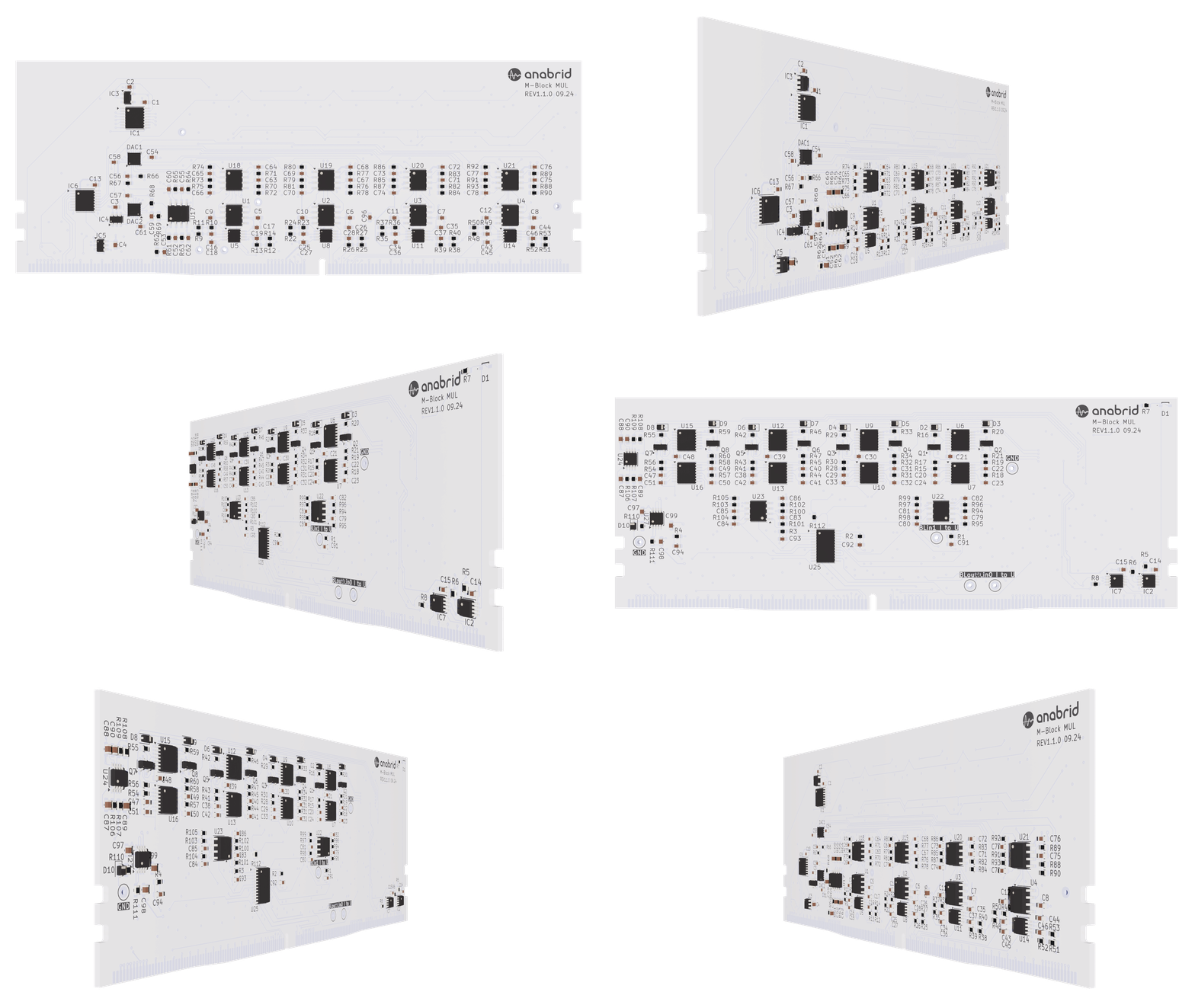
The math block with the multipliers implements the multiplication of signals.
Description
The M-block MUL comprises four multipliers, each of which has two inputs, 𝑥𝑖 and 𝑦𝑖, and together they deliver four output signals, represented as voltages, of the form 𝑥𝑖 ∗ 𝑦𝑖.
Price
? ,- EUR
M-Block INT
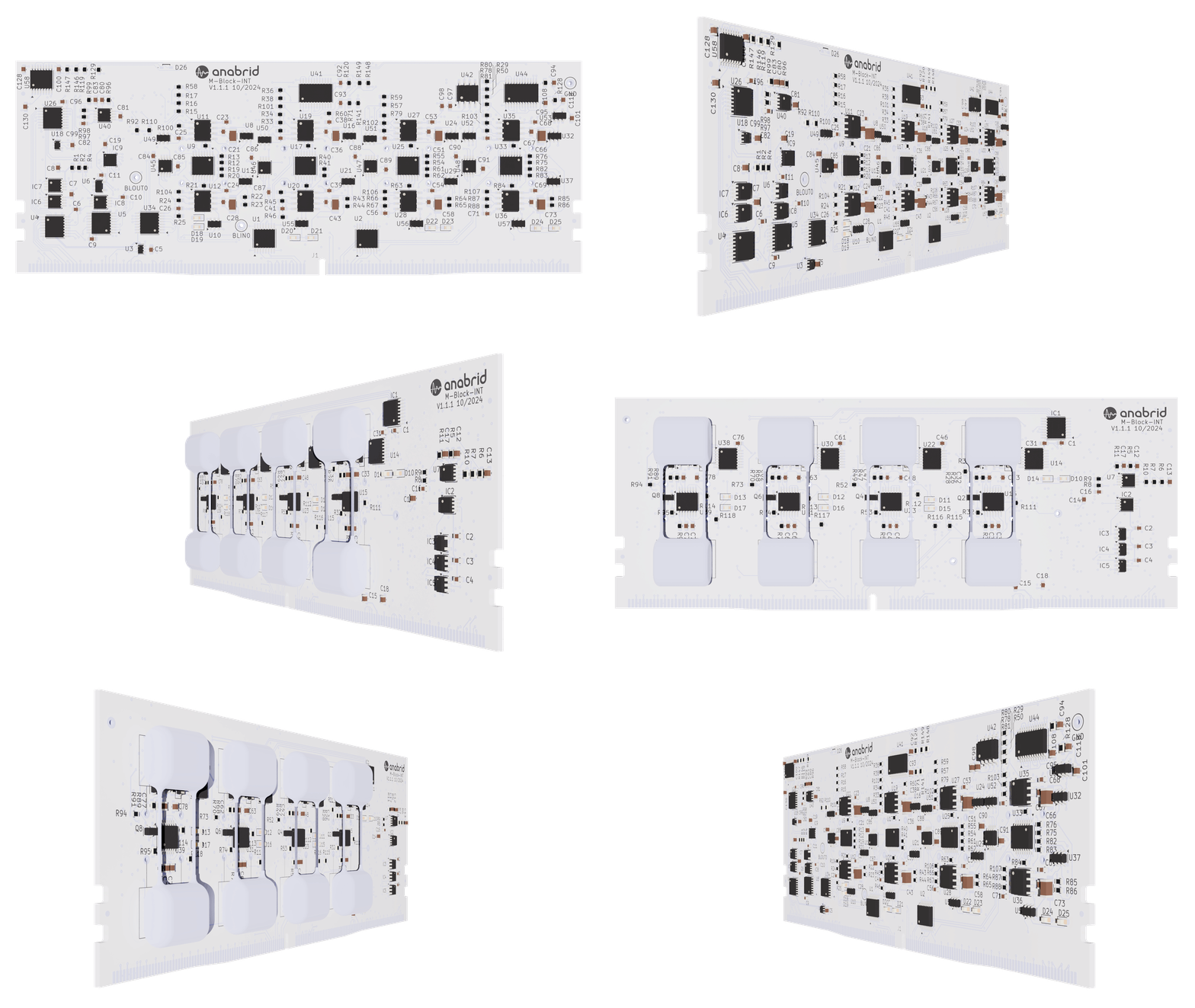
The math block with integrators implements signal integration.
Description
The M-Block INT comprises eight integrators with current input and voltage output. Theintegrators each consist of an operational amplifier, two switchable integration capacitors for implementing the time scaling factors 𝑘0 = 100 and 𝑘0 = 10000, and the necessary electronic switches for operating mode control (IC, OP, HALT).
Price
? EUR
M-Block MDR
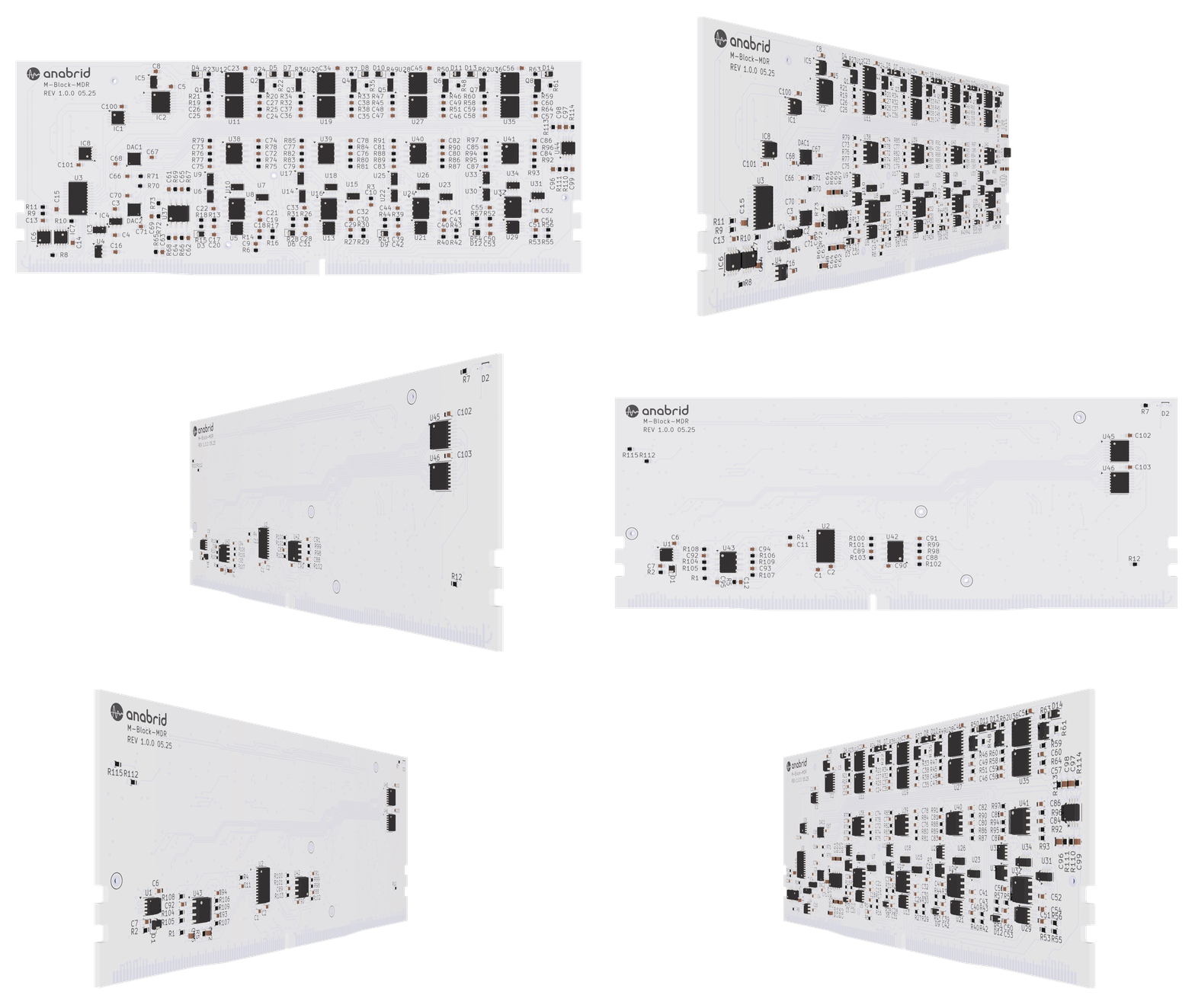
?
Description
?
Price.
? EUR
T-Block
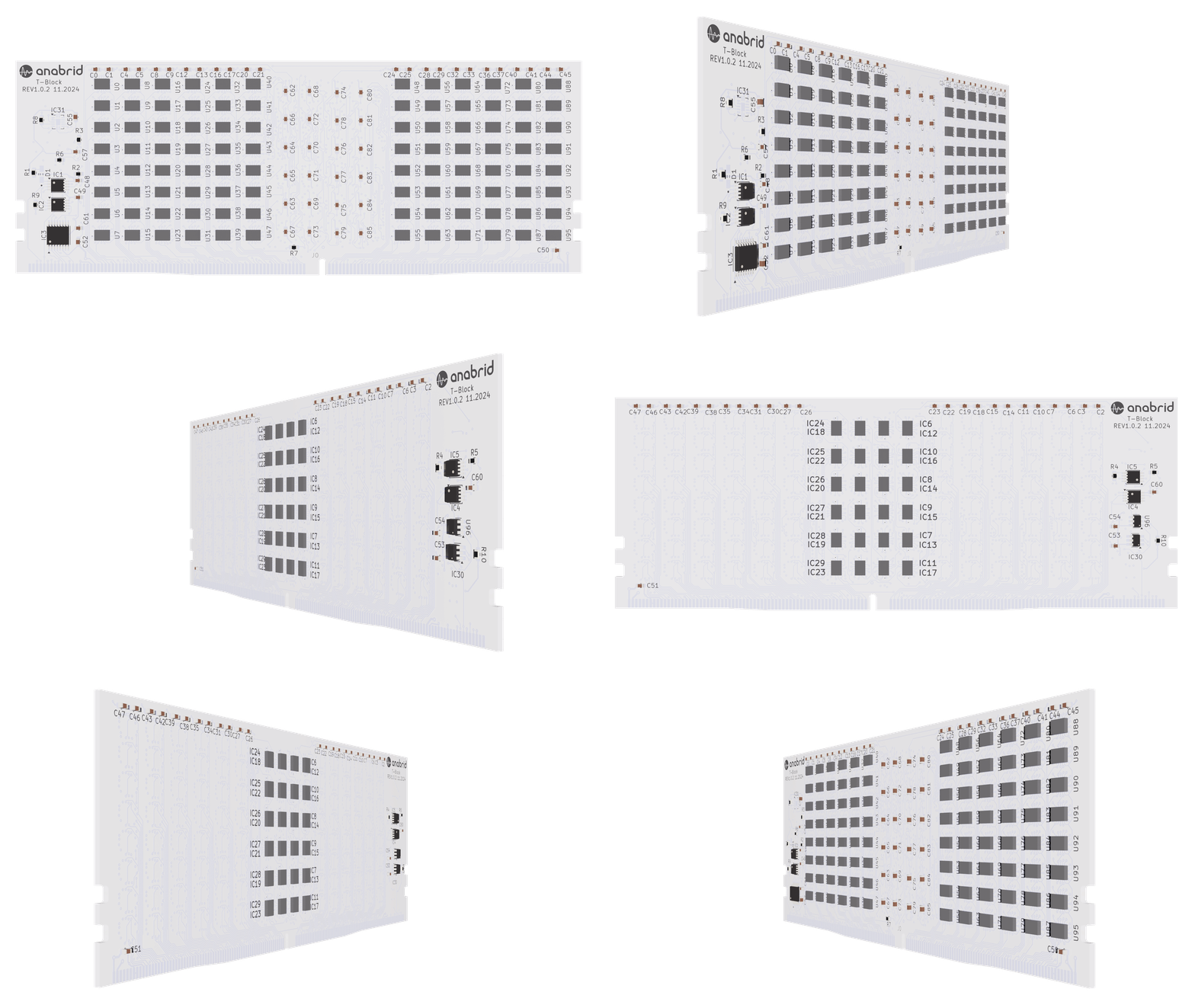
The T-block is a central component of the mREDAC and is responsible for the communication between the individual computing clusters.
Description
The T-block has 96 analogue inputs and 96 analogue outputs, each divided into 24 groups.
Its task is to relay signals between the individual computing clusters within the mREDAC, similar to a telephone exchange. It also relays signals between the clusters and the backplane.
Price
?,- EUR
SH-Block
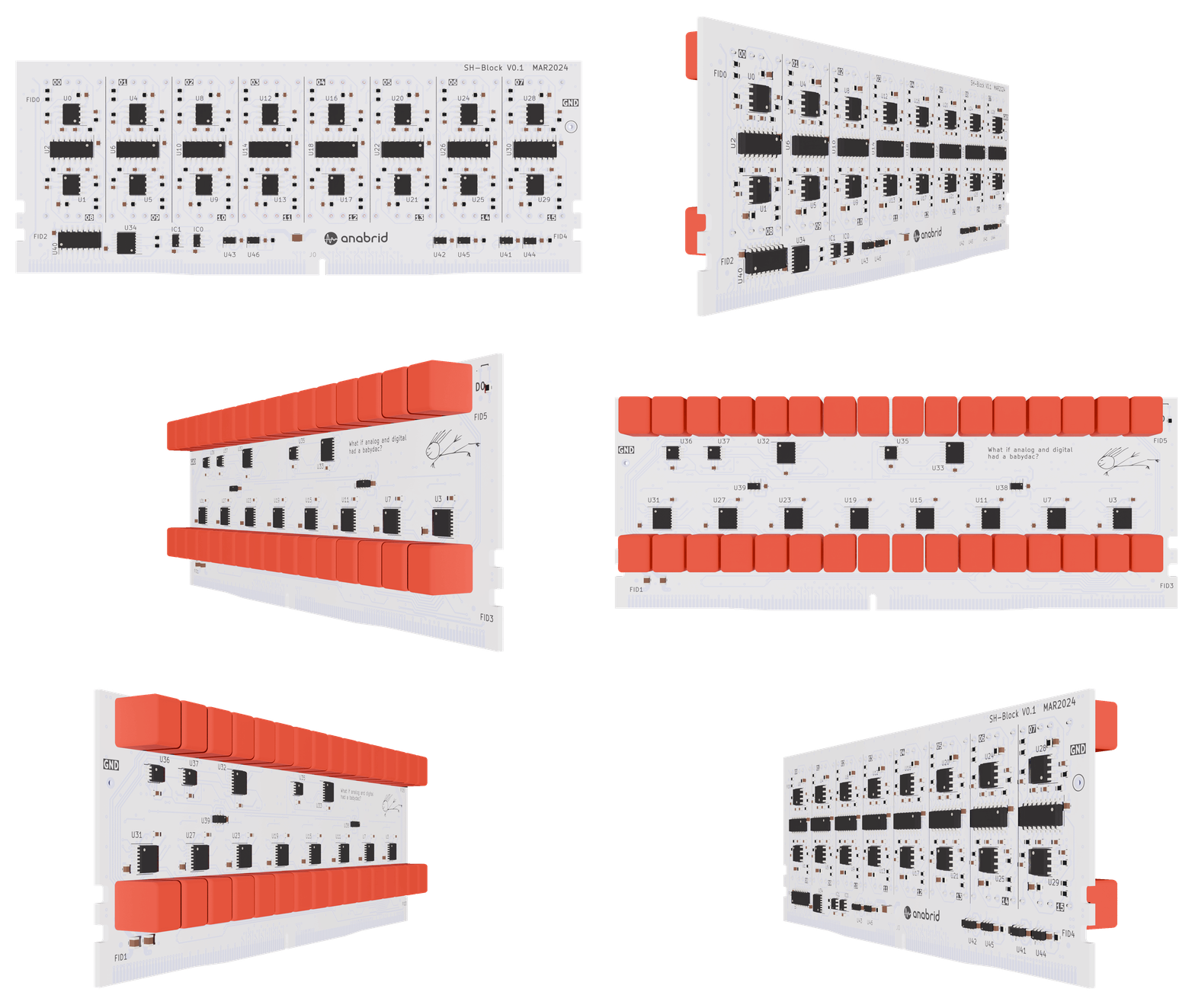
The sample-and-hold module (S&H) is a core component in analogue hybrid computers that serves as analogue memory. It enables a continuously changing analogue voltage value to be „frozen“ at a precise point in time and this value to be kept constant while the input signal continues to run.
Descripton
The SH block contains eight identical blocks, each with two sample and hold circuits (SHA_INJECT_A, SHA_INJECT_B). In the final design, a compensation path with an identical CMOS switch and storage capacitor was added to each sample and hold circuit. For this purpose, the storage capacitors were measured in pairs for identical capacities before assembly.
Price
?,- EUR
Ctrl-Block
The control block implements the configuration of the analogue computing elements, the interconnection of the computing elements, the control of analogue computing, and the communication between the digital and analogue parts of the hybrid computer.
Description
The CTRL block represents the interface to the controlling digital computer and handles the configuration and parameterisation of a computing circuit as well as the reading out of results. At its heart is a microcontroller that is connected to the outside world via a USB and Ethernet interface. In productive operation, the system is connected via the Ethernet interface, while the USB interface is only required for (one-time) flashing of the necessary firmware.
In addition, the CTRL block has eight ADCs for reading out calculation results, which is possible in all three operating modes (IC, OP, HALT). The offset voltage required for shifting the voltage values supplied by the arithmetic elements and the reference voltage, which serves as a reference point for the ADC, are also obtained on the CTRL block and derived from the central reference voltage using two buffered voltage dividers.
Price
?,- EUR
COMM-Block
Description
?
Price
?,- EUR